
Before the pitch, the interview: how Yale's I-Corps program turns customer conversations into federal funding
Most early-stage ventures fail for a simple reason: They build something no one wants to buy. Since summer 2024, Yale’s Customer Discovery by NSF I-Corps program has helped Yale faculty, graduate students, and postdoctoral researchers catch that problem early. The program gets them out of the lab and into conversations with the people who would use, buy, or pay for their work.
The approach is working. In two years, the program has supported six cohorts and engaged 131 Yale innovators and mentors across 68 teams. Its strongest teams advance to National I-Corps, NSF’s intensive seven-week program, which awards $50,000 per team to test whether research can become a business. Yale sends teams there at a rate few peers match. In the past year, Yale won nine of the Northeast Hub’s 15 national slots. Those teams brought in $550,000 in National I-Corps funding, more than four times the program’s $125,000 annual grant from the National Science Foundation (NSF).
The Yale School of Engineering & Applied Science (Yale Engineering) secured the grant, and Sarah Miller, the school’s senior associate dean, administers it. At Yale Ventures, Susan Carr, director of faculty engagement, runs the program as its lead instructor and supplies mentors from Yale Ventures’ entrepreneurs in residence.
Twenty interviews before anything gets built
Over several weeks, teams learn the lean startup method, write down their assumptions, and test them in at least 20 interviews with customers and stakeholders. They map the ecosystem around their innovation, including buyers, influencers, and gatekeepers, and refine their value proposition as evidence comes in. Each team receives a $1,500 stipend and a mentor from Yale Ventures.
“You have to come at it indirectly to be sure you are not biasing your results,” said Carr. “We help our innovators learn the art of interviewing to ensure their product will meet customer needs. That’s why we push people to do this early. You don’t need a pilot, an MVP, or a prototype.”
The evidence often changes the plan. Of participants surveyed, half of them reported a pivot as a result of the program. Here a pivot is a good outcome, because it points the work toward something the market will take up.
From 20 interviews to 100: competing for national slots
The follow-on funding comes through National I-Corps. Teams in that program conduct 100 customer interviews and are additionally supported by a $50,000 grant, usually directed toward product development.
Admission became harder in July 2025, when NSF moved to hub-based allocation limiting participants to the region where they’re based. For example, the Northeast Hub has 15 member institutions and distributes 15 national slots a year. Between July 2025 and July 2026, Yale teams won nine of them. Yale also won two of a limited number of new National Quantum slots, a track outside regional competition.
Teams led by Professors Gaoyuan Wang and Mark Gerstein each worked with a Yale Ventures entrepreneur in residence as their required industry mentor. Five more Yale teams are waiting for national slots.
From the lab to the market: Core Timber
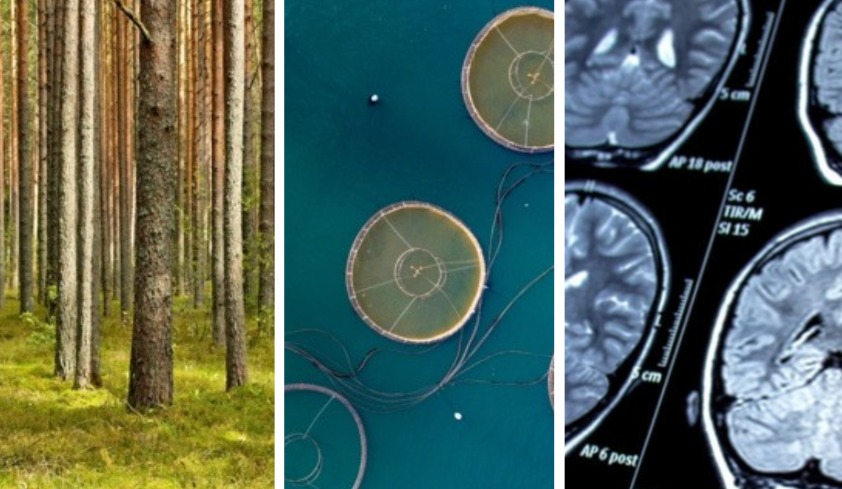
Core Timber, from the spring 2026 cohort, shows how early the work can start. The team is led by PI Alan Organschi, Professor in the Practice and Director of the Yale Building Lab. One of the team's member's, Andy Ruff ’15 M.E.D., a lecturer at the Yale School of Architecture and design director at GOA Architecture in New Haven, runs the fabrication practice. Core Timber is developing robotically fabricated mass timber structural components from mixed-species forests in the northeastern United States. The timber is harvested through regenerative forest management to replace emissions-intensive materials like steel and concrete. Jeff Carroll of Urban Wood Economy mentors the team.
Ruff’s and the CORE Timber team developed the technology for its own projects, and in 2024 Yale Planetary Solutions funded a demonstration. But the team had no plan to commercialize it. That changed in January 2026, when it entered the Planetary Solutions Impact Accelerator (PSIA) and director Stu DeCew ’11 M.B.A., M.E.M. recommended I-Corps.
“The idea was to use I-Corps to get up to speed on the commercialization question — to learn how to ask better questions,” Ruff said. “We didn’t yet have the founder mindset.”
The team’s accelerator application centered on the technology’s benefits to forest ecosystems. In a session with DeCew and Henry Ritter ’25 M.E.M., M.B.A., then a PSIA portfolio manager, that framing didn’t hold. “We launched into how sustainable it was, and they stopped us,” Ruff said. “They said, ‘Of course you’re sustainable. Now we need to talk about how to get this into the world.’ It was a completely different lens.”
The work narrowed the team’s focus. Core Timber’s platform can produce many parts of a building; the team now knows which product it will bring to market first. It is building pilot structures with partners including Yale Forests and is in the 2026 cohort of the Vermont-based Forest Business Accelerator, which awarded a grant after the team participated in the regional I-Corps. The team begins National I-Corps this winter.
From disease to data: phage therapy for shrimp farms
Benjamin Chan, a research scientist in the Department of Ecology & Evolutionary Biology, co-leads another spring 2026 team that won a national slot. His project received a Yale Planetary Solutions Constellation Grant and was one of four grant applicants selected for PSIA. Bacterial disease outbreaks in shrimp farming drive antibiotic misuse, environmental contamination, and export disruptions. Chan’s team is testing phage therapy on shrimp farms in Ecuador, using bacteriophages, naturally occurring viruses that infect bacteria, to suppress the bacteria that cause disease while sparing beneficial microbes.
The team entered I-Corps focused on helping small shrimp farmers in Ecuador manage disease. The interviews revealed something it hadn’t been looking for: how those farmers use data.
“We learned a great deal about how our target demographic makes decisions,” Chan said. “They use a mix of observations, data points, and experience to inform major operational decisions, but they don’t track these effectively to be able to analyze trends more deeply.”
The team now plans a service that gives farmers more visibility into their operational decisions while still helping them manage disease. Because its priority is reaching lower-income farmers, its business model depends on volume. “The National I-Corps makes it possible for us to connect more deeply to a greater number of farmers and learn from them,” Chan said.
The longer arc: Defin3D
These teams show how the work begins. Defin3D shows where it can lead.
Frank Buono, PhD is a research scientist in Psychiatry at Yale School of Medicine and is the founder of Defin3D (a 2024 Blavatnik Awardee), which builds 3D AI software to evaluate and monitor brain tumors. The software tracks tumor growth across serial MRIs taken over years. With it, radiologists complete an assessment in 60 to 90 seconds instead of 45 minutes.
He did not seek out I-Corps. When Carr invited him to join a regional cohort in fall 2024, he declined. She wrote back with five reasons to reconsider — and he did.
The regional cohort had five or six teams. “The amount of information that we learned in just the regional program alone changed the trajectory of what we were thinking about in my company,” Buono said.
At Carr’s recommendation, Buono went on to National I-Corps, where he interviewed teams at Massachusetts General Hospital, Johns Hopkins, Northwestern, Washington University in St. Louis, and the University of Alabama at Birmingham. Every center showed the same pattern.
“We interviewed IT, shipping and logistics, and all these other different departments to see how many hands touched the software before we could even get a yes and a contract in a health system,” Buono said. “We thought it would take two months. We discovered it’s usually a year.”
For a startup, a year without revenue is a serious risk. “It just makes us a whole lot more mindful about the sales cycle,” Buono said. The finding changed Defin3D’s business model, not its product. The company now plans to earn revenue from several directions while institutional deals move through the system. “We have to hit patients. We have to hit data warehouses. We have to hit clinical trials, because we can’t just wait for [hospitals] to hop on board,” he said.
That is the kind of pivot the survey numbers describe: The technology held; the path to market changed.
His advice to other scientists is to start close to home. “Take advantage of I-Corps at Yale, and then use that to your advantage [at the national level],” he said. The national program is a bigger lift, he noted: more than 100 interviews, and bringing on a team that can handle the logistics.
Scale and reach
Participants have come from Yale Engineering, the Graduate School of Arts and Sciences, and the schools of Architecture, the Environment, Medicine, and Nursing. They rate the program 4.7 out of 5 on average, and every survey respondent said they would recommend it. One of this fall’s two cohorts is aimed at teams applying to HealthTech Works, Yale Ventures’ digital health and medtech accelerator, which opened its first application cycle this year.
Reaching the faculty who would benefit is its own challenge; Buono joined only after Carr followed up. For those who do join, the first step toward market is increasingly a conversation with a customer.
“The biggest shift was thinking of this as a commercial entity and not a research project,” Ruff said. “For our profession, that is a very different mindset. We didn’t have the language or the framework. Now we know our market and where we’ll make our entry.”