
PSIA AWARDEES
2025-2026 Awardees
The Yale Planetary Solutions Impact Accelerator (PSIA) is a Yale Ventures accelerator designed to fast-track the development of transformative solutions to planetary challenges. The inaugural cohort of PSIA awardees has been announced, with four projects selected to receive milestone-based grants of up to $250,000 over two years. For more information, read the YaleNews coverage here.

Pilot-Ready Development of Plasmon-Enhanced Catalytic PFAS Treatment via Reductive Defluorination
Project Team:
John Fortner, Professor & Chair of Chemical & Environmental Engineering
James Mayer, Charlotte Fitch Roberts Professor of Chemistry
Krystal Pollitt, Associate Professor of Epidemiology
Özce Durak, Ph.D. Student in Chemical Engineering
Per- and polyfluoroalkyl substances (PFAS) are synthetic organic compounds with exceptionally strong carbon–fluorine bonds that have been widely used in industrial applications and firefighting foams, resulting in persistent environmental contamination and associated human and ecosystem health risks. In response, regulatory pressure is increasing globally, creating urgent demand for treatment technologies that move beyond traditional approaches. This project will translate a breakthrough photo-driven, plasmon-enhanced catalytic technology that enables complete PFAS defluorination under ambient, low-energy conditions into a pilot-ready water treatment technology. The process does not require external hydrogen and avoids the formation of short-chain byproducts. Through catalyst optimization, validation in real-world waters, and pilot-scale integration, the project will deliver a treatment technology that supports long-term protection of water resources, ecosystems, and human health.
PI Contact: john.fortner@yale.edu

CORE Timber: Robotically Fabricated Structures from Regeneratively Managed, Mixed-Species Forests
Project Team:
Alan Organschi, Professor in the Practice, Yale School of Architecture
Barbara Reck, Senior Research Scientist, Yale School of the Environment
Joseph Orefice, Director of Forest & Agricultural Operations, Yale School of the Environment
Oswaldo Chinchilla, Ph.D. Student in Architecture
The building sector is a major source of global carbon emissions, while forests—essential to climate stability, biodiversity, and clean water—are increasingly degraded and undervalued by construction markets. This project advances an implementation-driven solution by linking forest restoration in the Northeastern United States with decarbonized building systems based on innovative, robotically fabricated mass timber components. Through collaborations with forestry scientists, engineers, architects, and industrial ecologists, the project will develop, test, and deploy structural components fabricated from regionally sourced, mixed-species timber harvested through regenerative forest management. These systems will ultimately be incorporated into several building pilots, demonstrating reduced embodied carbon, long-term urban carbon storage, and construction feasibility. If successful, the project will accelerate climate-positive construction while strengthening both rural and urban economies.
PI Contact: alan.organschi@yale.edu
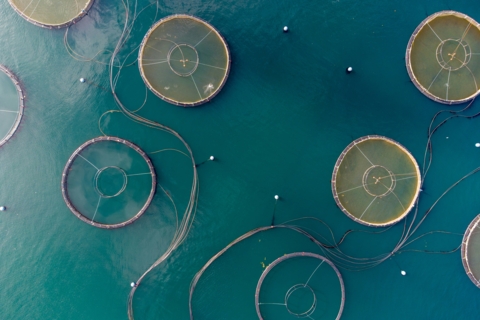
Phage Therapy as a Service to Reduce Outbreaks in Aquaculture
Project Team:
Benjamin Chan, Research Scientist, Department of Ecology & Evolutionary Biology
Bacterial disease outbreak in shrimp aquaculture is driving antibiotic misuse, environmental contamination, economic loss, and export disruptions while threatening global food systems and coastal ecosystems. This project will develop and field test a disease control approach using bacteriophages, naturally occurring viruses of bacteria, to selectively suppress the bacteria that cause disease. Unlike antibiotics or chemical disinfectants, phages are designed to target bacterial virulence factors required for infection, reducing disease risk while preserving beneficial microbes and avoiding harmful residues. Working with shrimp producers and government regulators, we will generate field-validated treatment protocols, monitoring tools, and regulatory-ready documentation. If successful, this work will reduce antibiotic reliance, lower environmental contamination, strengthen livelihoods, increase export biosecurity, and establish a scalable, public-benefit model for sustainable aquaculture.
PI Contact: b.chan@yale.edu

Commercial Pathway for Carbon-Negative PFAS Remediation on Agricultural Lands
Project Team:
Noah Planavsky, Professor of Earth & Planetary Sciences
John Fortner, Professor & Chair of Chemical & Environmental Engineering
Krystal Pollitt, Associate Professor of Epidemiology
Jake Thompson, Research Associate, Department of Earth & Planetary Sciences
This project addresses two connected challenges: 1) Proven carbon dioxide removal (CDR) technologies such as enhanced weathering and biochar remain difficult to scale due to limited financing, 2) PFAS contamination has impacted large areas of agricultural land and created a growing economic burden and public health risk. This project will demonstrate a remediation framework that embeds CDR into PFAS cleanup, allowing state, federal, and litigation-based remediation funding to support large-scale CDR. By combining plant-based PFAS removal, increased plant uptake through soil chemistry changes, and thermal treatment of harvested biomass to destroy PFAS and produce biochar, remediation and CDR occur simultaneously. We will demonstrate this strategy at scale to evaluate its effectiveness and cost efficiency. If successful, this work will provide agencies with a practical, lower-cost pathway to restore contaminated farmland, reduce PFAS exposure, and deliver meaningful long-term CDR.
PI Contact: noah.planavsky@yale.edu