1928

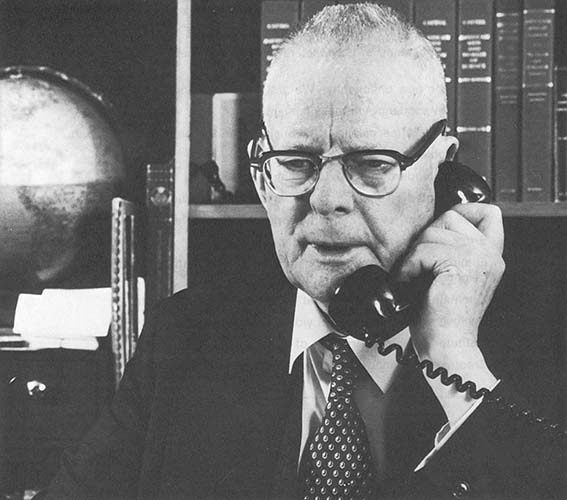
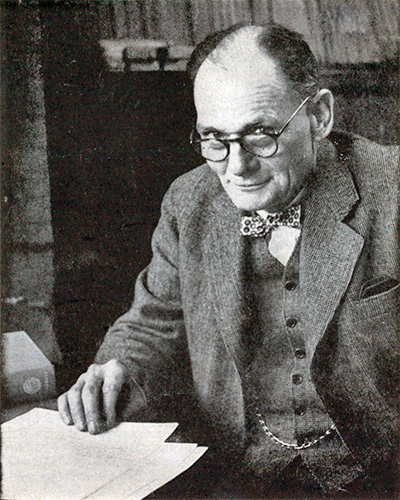
Edwards Deming

Edwards Deming photo

Edwards Deming invented the “total quality management” concept, used to improve design, service, testing and sales using statistical methods that significantly improved Japan’s manufacturing and economic success. Not until his death in 1993 was he recognized in the U.S. and he was honored by President Reagan in 1987 with the National Medal of Technology. The following year he received the Distinguished Career in Science award from the National Academy of Sciences.
1921

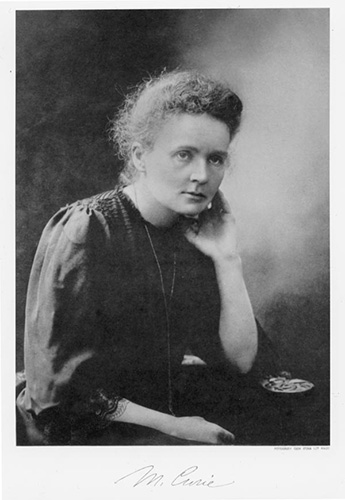
Marie Curie

Marie Curie photo

Marie Curie was the first woman to receive an honorary science degree from Yale. She attended an illegal, clandestine university in Poland and later married Pierre Curie, with whom she shared her first Nobel Prize for her contributions to the study of radiation in 1903. She received her second Nobel, in chemistry, for the discovery of radium and polonium, in 1911.

1919

John Enders

John Enders photo

John F. Enders left his studies at Yale to become an air force pilot, but would return to receive his degree in 1919. He would go on to receive his PhD from Harvard and do transformative research related to infectious diseases. His in vitro culture of the poliovirus led to a Nobel Prize in 1954, and Enders’ work would be responsible for the development of both the polio and measles vaccines. He is known as the “father of modern vaccines.” 

1840

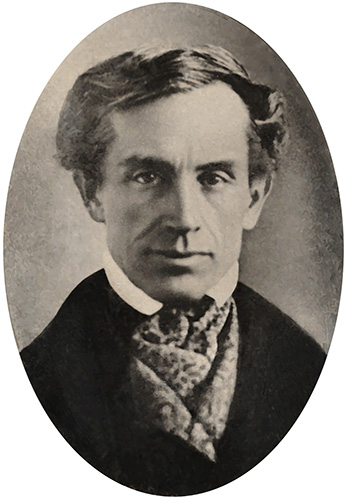
Samuel Morse

Samuel Morse photo

As a student at Yale College, Morse was interested in both art and electricity. He would go on to become a well-known portrait artist. Between 1832 and 1837, he developed a working electric telegraph, using materials at hand, including a battery and gears. His device was capable of transmitting dots and dashes that could be “sound read” by operators—the famed Morse code.

1896

Lee DeForest

Lee DeForest photo

Lee DeForest was a prolific inventor who received his PhD from Yale in 1896, with over 300 patents to his name. Most prominently, he is remembered for inventing the audion, a vacuum tube that can amplify weak electrical signals and allowed AT&T to have nationwide phone service and for sound transmission for radios, TVs and even early computers. DeForest is known as “the father of radio.”

1858

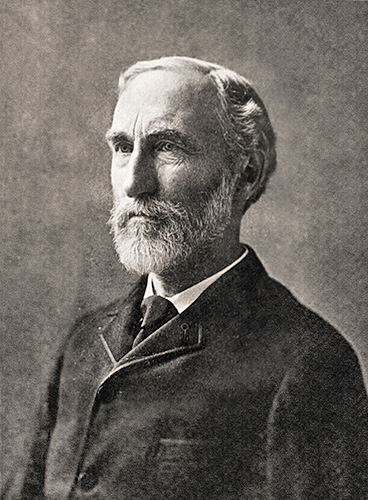
Josiah W. Gibbs

Josiah Willard Gibbs photo

The son of Yale professor who would later become a Yale professor himself, Josiah W. Gibbs was a theoretical physicist and chemist who was one of the greatest scientists of his time—although largely unrecognized. He applied thermodynamics to physical processes, leading to the development of statistical mechanics.

1792

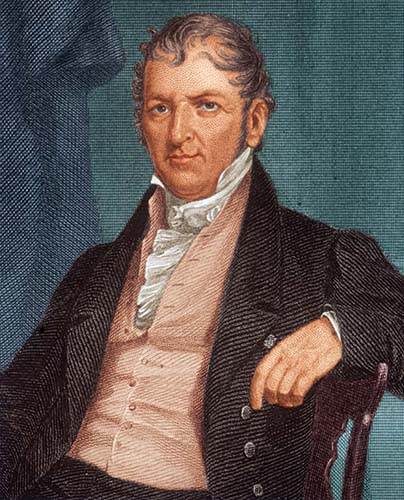
Eli Whitney

Eli Whitney photo

Having graduated from Yale College, Whitney went on to design a cotton gin for cleaning green-seed cotton and secured a patent for his invention in 1794. He later developed the concept for mass production of interchangeable parts displayed in assembling muskets.

1755

David Bushnell

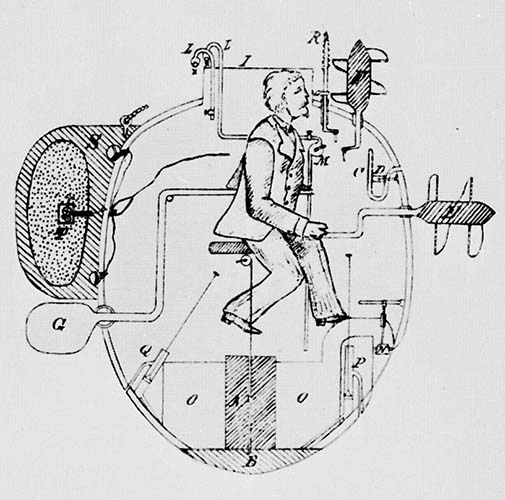
Bushnell graduated from Yale in 1775, at the outbreak of the American Revolution, and went on to build the “Turtle,” a turtle-shaped submarine which was propelled underwater by an operator who turned its propeller by hand. The “Turtle” was armed with a torpedo and several attempts were made using the Turtle against British warships. Bushnell is known as the “father of submarine warfare.”

Bushnell graduated from Yale in 1775, at the outbreak of the American Revolution, and went on to build the “Turtle,” a turtle-shaped submarine which was propelled underwater by an operator who turned its propeller by hand. The “Turtle” was armed with a torpedo and several attempts were made using the Turtle against British warships. Bushnell is known as the “father of submarine warfare.”

Subscribe to